Review: Second Grade is a Walk in the Park Svg for Embroidery
As a designer who spends half my life digitizing and the other half stitching, I have learned that not every cute graphic translates well to thread. We often browse Crafts marketplaces looking for the next best seller, only to find files that look great on a screen but turn into a tangled mess under the needle. Recently, I pulled the Second Grade is a Walk in the Park Svg from my asset library to evaluate its potential for real-world application. This isn’t just about whether it looks pretty; it is about whether it holds up as a viable machine embroidery design for client work and small business inventory.
First Impressions and Visual Personality
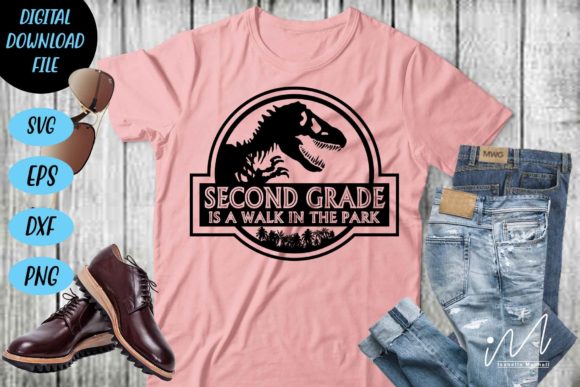
The first thing that strikes you about this design is its playful, optimistic mood. The phrase “Second Grade is a Walk in the Park” suggests ease, fun, and outdoor adventure, which is perfect for back-to-school season. Visually, the layout feels balanced. Since this file comes with two-color variations, you have immediate flexibility. For an embroidery project, this simplicity is a strength. Complex, multi-colored Graphics often require excessive thread changes and increase production time. A two-tone approach keeps the stitch count manageable and the visual impact clear.
The typography appears friendly and rounded, avoiding sharp serifs that can be difficult to stitch cleanly. When I imagine this as a finished product, I see it working best where clarity is key. It does not rely on tiny, intricate details that might get lost in fabric texture. Instead, it relies on bold shapes and readable lettering, which is crucial for items that will be viewed from a distance, like backpacks or tote bags.
Real-World Application: The Tote Bag Test
To truly test the viability of the Second Grade is a Walk in the Park Svg, I mentally walked through a common scenario: creating a custom tote bag design for a local elementary school fundraiser. Parents love personalized items, and second graders are at an age where they appreciate having their own gear.
I envisioned stitching this onto a heavy canvas tote. Canvas has a distinct weave, so a design with too much fine detail would sink into the fabric. However, the bold nature of this SVG suggests it would sit nicely on top. Using a satin stitch for the text and a simple fill stitch for any accompanying graphic elements (like trees or paths implied by the theme) would provide good coverage. The two-color variation allows for high contrast—perhaps navy thread on a natural canvas, or bright green on white. This contrast ensures the message is legible, which is the primary goal of any personalized gift.
Apparel and Wearables
Beyond totes, this design is a strong candidate for custom apparel. Imagine it on the back of a denim jacket or the chest of a sweatshirt embroidery project. Sweatshirts are forgiving fabrics, but they are also thick. The design needs to be dense enough to stand out but not so dense that it creates a stiff, uncomfortable patch on the garment. Because the SVG allows for color changes, you can adapt the thread colors to match school colors or personal preferences. This adaptability is vital for Etsy sellers who need to offer customization options without redesigning the entire file.
For baby embroidery or younger children’s clothing, caution is needed. While the sentiment is sweet, ensure the hoop size fits the garment. A large design on a small toddler tee can look overwhelming and feel heavy. Always check the dimensions of the SVG against your standard hoop sizes before committing to a production run.
Technical Considerations for Stitching
It is important to remember that an SVG is a vector graphic, not a native embroidery file. To use this in a machine, you must convert it using digitizing software or ensure you are purchasing a version that includes DST or PES formats if available. The product description mentions SVG, DXF, and EPS formats. This means you have the raw shapes to create your own embroidery file. This is actually a benefit for experienced designers because you can control the stitch density and type.
When digitizing or preparing this for stitch-out, pay attention to the corners of the letters. Sharp angles in vector graphics can cause thread breaks or puckering if not properly under-stitched. Use a running stitch for outlines if you want a sketchy, hand-drawn look, or opt for satin columns for a polished, professional finish. Always test on scrap fabric first. Different fabrics react differently to tension. A stabilizer is non-negotiable here; a cut-away stabilizer is best for stretchy fabrics like t-shirts, while tear-away works for stable woven cottons.
Fabric and Surface Challenges
Where should you use this design carefully? Avoid highly textured fabrics like thick wool or bouclé, as the clean lines of the text may get obscured. Similarly, be cautious with dark fabrics if you are using light thread colors without a proper underlay. The contrast is key to the design’s success. If you are stitching on a curved surface like a cap, ensure the design is scaled down appropriately. Large text can distort on curved hoops, making the words hard to read.
Also, consider the end-use. If this is for a holiday embroidery gift or a daily-use item like an apron, it will undergo frequent washing. Ensure your thread quality is high and that the stitch density is sufficient to prevent unraveling. A poorly digitized file with loose connections between letters will not survive the wash cycle.
Commercial Value and Brand Consistency
For craft business owners, the value of the Second Grade is a Walk in the Park Svg lies in its niche appeal. Back-to-school is a massive sales period. Having a design that is specific yet versatile allows you to target a precise audience without limiting yourself to one school or color scheme. It enhances brand consistency if you maintain a playful, high-quality aesthetic across your shop.
When listing this as a small shop product, use high-quality printable mockup images to show how the design looks on various items. Show it on a backpack, a lunchbox, and a shirt. This helps buyers visualize the handmade product in their lives. Customer trust is built on transparency and quality. If the stitching is clean and the design is well-executed, customers are more likely to return for future grades or sibling items.
Final Designer Notes
Before you commit to selling this as a commercial embroidery item, double-check the licensing terms associated with the SVG. Since you are receiving vector formats, ensure you have the right to use the resulting stitched designs for commercial goods. Most designers allow this, but it is always wise to confirm.
- Test First: Always stitch a sample on the actual fabric you plan to sell.
- Check Contrast: Ensure thread colors pop against the fabric background.
- Stabilize Properly: Match the stabilizer to the fabric weight and stretch.
- Verify Dimensions: Confirm the design fits your intended hoop size.
- Inspect Details: Look for tiny gaps or overlapping paths in the vector file before digitizing.
The Second Grade is a Walk in the Park Svg is a solid choice for designers who understand the importance of simplicity in embroidery. It offers a cheerful message that resonates with parents and students alike. By paying attention to technical details like stitch density and fabric choice, you can transform this digital asset into a high-value embroidered patch or apparel item that stands out in a crowded market. It is not just a graphic; it is a tool for creating memorable, tangible products.